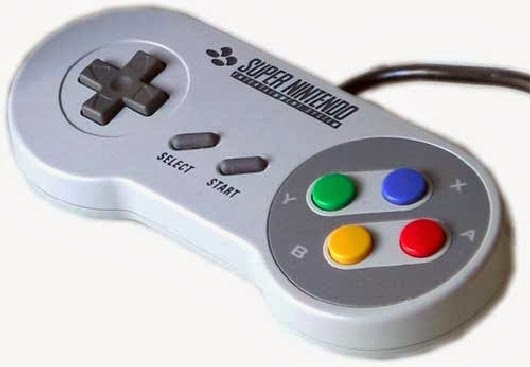
Friday, February 14, 2020

Super FamiComplete #4: Actraiser (Redux)


Title: Actraiser

Release Date: 12/16/90

Developer: Quintet

Publisher: Enix Corporation

Actraiser was really the first game that I had no experience with before the blog, but quickly became one of my favorites in all the SNES library. I had always heard of the game in those old SNES Game Guides they used to sell, where they would publish walkthroughs for thirty or forty games, slap a fantasy cover on them, and sell them for $15-25 dollars a pop.

I swear I had like three of these out at a time from the library...
Like I said, this game was an utter delight. It is a really fun title that boldly marries two different genres together to great effect.

Story

In the game, you play as a loving deity named "The Master" who rules over the earth from his floating citadel in the sky. By the time the game begins, the Master had suffered a defeat at the hands of the evil demon, Tanzra, and the Master was forced to enter a deep, thousand year sleep in order to heal. Thus, once he awakens, he realizes that he must rid the earth of Tanzra's monsters and then eventually defeat the evil demon king himself. One of the things that I find interesting is that you don't play as The Master, but instead as two different instruments of his will, a Warrior's statue brought to life in order to slay some demons, and a little Cherub who talks to the people of the world for you.


Gameplay
The game is then split into two game-play types: one where you play as the statue and embark on hack-and-slash side-scrolling levels, and God-Sim portions of the game where you help rebuild the human civilizations. Each "level" of the game plays thusly: you enter a new region of the world map, which has been eradicated of human life thanks to the demons of Tanzra. The master descends with his citadel in an amazing display of Mode 7, and sends out his statue-warrior to clear out a foothold in this region. This is one hack-and-slash level that ends with a boss fight against an elite demon. Then, you must rebuild the civilization from two people. This is the god-sim portion of the game. You care for your people, perform miracles to help promote their growth or remove obstacles to their growth, and you stop demons from encroaching on their burgeoning civilization. Finally, at some point, the area will be brought into some sort of turmoil, which can only be solved by Mr. Statue going back in and slaying the boss creature of this region. This plays out, on repeat, across six different regions.


Background
The game was developed by Quintet, a Japanese development house who would go on to later craft the epic trilogy of Soul Blazer, Illusion of Gaia, and Terranigma (though honestly this feels very connected, thematically, to those three games as well). Historically, they enjoyed a very nice relationship with Enix, the publishers famous for the Dragon Warrior series. After the days of the SNES, Quintet kind of dropped off the map. Very sad as they were clearly a gifted and innovative development house.


Them tasty licks
The music is absolutely fantastic as it was composed by the esteemed Yuzu Koshiro, the composer of the Ys series as well as Streets of Rage. Here are the best tracks from this beast of an OST.


The Nitty-Gritty: Statue Man
The game-play in the Warrior's portion of the game is equal parts hack-and-slash and platforming. Each level is littered with little traps and enemies. Most enemies can be banished with a simple swipe of the sword, while others take a bit more punishment. At the start of the game, your Warrior only has a bit of health, so you must really plan your course and jumps rather carefully, as you have only a brief period of invulnerability after you get hit, so you can wrack up damage rather quickly. Sometimes, the platforming controls can be a bit wonky. The Warrior statue has a tendency to be a bit sail-y in his jumps, and it can be hard to turn him around once he is committed to a jump, leading to some frustrating deaths. I would say, out of all the gameplay, the platforming has a tendency to be too frustrating. There is one boss later that is hair-pullingly punishing because it is centered on the platforming. The jumps of the Warrior are just not pin point enough to make the player's movements as exact as you need for the game, and there are many times where you will accidentally jump into a situation that costs you health.


 Thankfully, the Warrior doesn't have a huge "jump" backwards after he gets hit, like you do in a Mega Man or Castlevania game, so that is a small blessing.

One thing I do like is the limitations of the Warrior's weapon, and the effect this has on the game-play. The Warrior, aside from some magic you receive later, is only equipped with a sword, which has some reach but overall means you really have to engage with the enemies in the game. While you can swing the sword rather fast, the player's life is scaled just enough so that you just can't run in and try to tank through bosses. You really have to study patterns and figure out when it is best to strike. In the case of the first boss, the Centaur, you really have to just stick to the lower right corner and hide out, so he doesn't catch you with his charge attack, and then strike when he himself backs up. In the case of Act 1's first boss, the Minotaurus (original I know), you have to wait until he throws his axe to land a decent blow.

Plus you fight him in a Space dungeon!

The game does a good job of balancing the difficulty. It is difficult yet it provides a balanced learning curve. The levels aren't terribly long, so you never feel aggravated if you Game Over a platforming segment. The game is also generous with checkpoints throughout levels, ie. if you die on a Boss, you generally start right at the boss.

The Nitty Gritty: God Sim
As for the God-Sim portions of the game, the game-play is fun if a bit repetitive. You start each area with literally one man and one woman, and you have to shelter them through generations as they rebuild their land (I have to say it is a cool idea for a game to literally take place over aeons and aeons, as it gives the game an impressive amount of scope). You get to chose what direction the cities and towns develop in, and as the villagers repopulate the land, you must help protect them from the Monsters that seek to wreak havoc on their burgeoning village.

As well, you can control certain "miracles" such as rains and lightning, which can help either grow crops or clear shrubs and trees so that people can cultivate the land. During the first world, you control a little cherub who can shoot arrows at the various monsters: Bats, which carry off civilians from your cities, and White Dragons who have the ability to destroy houses if left unchecked. The goal in these segments is two-fold: a) to make your civilization as large as possible, for you level up your life and strength based on how large the population is, and b) to build your civilization in the direction of the Monster Dens peppered throughout the land. Once a civilization reaches one of the dens, they will seal the den themselves, stopping the constant flow of Bats and Dragons from attacking your village.


As I said, these segments take up the most time in your game, so I hope you enjoy building worlds. As far as Sims go, this one is relatively simple (Populous this is not): the interface is simple to comprehend and the game isn't overly punishing if you develop your city incorrectly. The actual game-play, though, can be rather tedious. If your civilization is expanding, your ability to create miracles or guide your people is suspended, so you have to wait for the people's "turn" to finish. At the same time, you have to be constantly shooting and hunting down monsters, as they are a CONSTANT menace. This can be rather annoying, especially if you are trying to zoom through these segments. But as for a Sim game, this is really a simple Sim done right in my opinion; it is not overly long, and the game-play, with the hack-and-slash portions done in between, is rather fun in small doses.

I also enjoy how these two styles of gameplay complement each other. The Master's strength is based off the power of his believers, so the more believers you have, the more health your statue has in the combat segments. As well, your new magical abilities have to be "found" in the world by your believers, or gifted to you by them.

I will say that this is a game that is really well realized. The developer clearly had a distinct vision in mind, and they truly did a great job of making this vision a reality. One of the things I enjoy are all the hints and religious symbols peppered in the background of levels. Each world is influenced by a different ancient culture, the first being a very Greek influenced world, and the monsters you encounter and the dungeons you explore certainly reflect the religious ideology of that ancient civilization. The architecture is filled with pillars and vaulted ceilings, while there are animal statues and pagan alters strewn about the dungeons. Even the bosses of this world, the Centaur and the Minotaur, are each Greek monsters in origin. Meanwhile, the characters you control, the Cherubic Angel and the Warriors statue, and even the floating citadel which the Master resides in have a very classic Christian feel to them, adding a few more layers to the symbols within the game. It tickles the fancy of the Social Studies teacher inside me.

Worst Boss
The dragon fight in Aitos is one of the most annoying boss fights in the game. He darts about the arena, which consists of a series of small platforms, and is only vulnerable at his head. He does have a set pattern of movement, but he moves so quickly that at first this can seem totally at random. He also moves so quickly that your magic attacks are only a minor benefit. Since the fight takes place on the rocks in the middle of a water fall, the boss will knock you off these rocks and kill you instantly on a frequent basis. Very annoying.

Looks fun right? Well there are a couple things that make this fight more manageable. Right before you fight the boss, there is a power-up which allows you to shoot beams from your sword, giving you much more range to your attacks (I feel this power up was made for this fight, as it makes the fight much more manageable, and I didn't find it anywhere else in the game). The other key is the "sweet spot;" there is one platform where, except for one move where the dragon darts right over your head (it can be avoided by ducking), the platform is completely safe from harm, and there are some key moments that you can hit the dragon from this position.

Worst Part of the God Sim Portions
There is one enemy that is just a big red skull. Screw those things. First off, they are super creepy, and when they spawn, they will often just sit there motionless and stare at you (the player). You will start pelting them with your little cherub arrows, which will do what seems like no damage (they take 12 hits to kill). Creepy. What's worse is when they activate. They are super aggressive to your cherub, and make it a point to try to take your little guy out of commission. Next, if left alone, they will start to cause earthquakes which utterly fucks your civilization. The later worlds start spawning these guys like crazy, and your map can enter a world of hurt very quickly if you aren't constantly watching your civilization.

Final Stage

The final stage is an epic boss rush of all the Act bosses, followed by the final showdown with two forms of Tanzra. There is no real "stage" to speak of except for this awesome screen that you are met with once you begin the stage, highlighting the bosses that you must fight.


Each boss you fight is a tougher version of their earlier selves, moving much quicker and shooting much quicker projectiles at you. For example, the Minotaur fight is tough as you almost cannot dodge his attacks, so you just have to hope you can defeat him before you lose too much life. When you beat a boss, the jewel on one of the statues heads is broken, and if you die you start from the same boss you were on, which is very fortunate.

The key to this section is preparation. You need to go in fully leveled up and with all seven of your Magic Scrolls unlocked so you can use magic throughout. While Magic works well on most all of the bosses, it should be conserved as once you use it, you can not use it again until you Game Over.

Tanzra himself is not terribly difficult. His difficulty comes in because he has such a huge lifebar (it extends across the entire screen), two forms, and his fight comes at the end of the gauntlet where you have already most likely depleted all your magic and lives. The game does give you the beam sword perk, though, which you might remember from the waterfall dragon fight. It is useful as ever, and cuts ribbons out of his first form.


The second form, though, is much more menacing and durable. Not only is its lifebar huge, but its weak spot is only vulnerable after he completes his attack pattern. The pattern, though, is rather simple after you run through it a couple of times, you just have to have the patience to possibly repeat the boss rush a couple times over to learn it.


Once you beat the big bad guy, all is good in the valley. You take a tour of each of your lands once again, and hear of their productivity and receive their thanks for vanquishing the demon hordes. Eventually, your Master notices that no one is visiting the temples anymore, and realize that the humans only pray and therefore believe in you during times of need. Feeling that his work is done, the Master once again goes into hibernation, knowing that he will awaken only when he is needed once more.

ADS and Commercials


As far as commercials, all I could find was a short Japanese tv spot.

Final Verdict
Honestly, games like this are the reason that I still enjoy this blog. They are fun, well designed (even if they have some kinks that need to be ironed out), and above all, imaginative. The music is a blast, I enjoy the graphical style (it is like a DragonLance cover come to life), and overall, it was a joy to complete. High recommendation with this one.

As for collecting, it is slowly creeping up in price. I originally paid $20 for mine, but now it is up around $40. Still, I think this is a necessary game in any collection.

Thursday, February 13, 2020

Super FamiComplete #3: Kablooey! (Redux)


Title: Bombuzal (JP), Kablooey (NA)
Release Date: 12/01/90 (JP)
Developer: Mirrorsoft
Publisher: Kemco

Ah Kablooey, technically the first third party game released for the Super Famicom. This was the first game of this blog that I was, initially, unfamiliar with. Well I am certain most of you reading this have never heard of this game. This was actually a blog post I was pretty proud of, initially, so little is changed. But here is the update nonetheless.

Background
While it is pretty easy to pick up a copy of Bombuzal, it is still, technically, a rare and little known title. Bombuzal is actually an American made game, developed by Anthony Crowther of Image Works, a US development house founded by Mirrorsoft, a UK developer. Crowther was one of those original game designers who started working and programming in the days of the Commodore 64, and actually Bombuzal is a port of a title created for that system. In fact, Bombuzal was created for most of the early computer based consoles, such as the Amiga, the Atari ST, and even an MS-DOS version was created. The publisher, Kemco, was a game publisher known for publishing either ports from other systems (they brought Daikatana to the N64...woof) or licensed games, as they have historically made games of some of those "second tier" licensed properties, such as Looney Toons, Treasure Trolls, and some of the more recent Batman games based off of the animated shows (they did Rise of Sin Tzu if you have played that "masterpiece").

 Here is the original Commodore 64 box.

Well, on to the game! Bombuzal/Kablooey is a puzzle game based around Dynamite Kablooey (Charlie Blast in the Japanese version), an amorphous blob with attached appendages whose goal is to blow up all the bombs in a set level without accidentally killing himself. The gameplay is very reminiscent of the kind of games that used to come with old Macs and PCs; perhaps a modern equivalent would be similar to mobile puzzle games. It is a single puzzle concept that increases in difficulty each and every level over a course of a hundred or so levels. I am sure if this game was created now, it would be a freemium game with "pay to win" features.


Gameplay
The actual gameplay is relatively short and sweet. The stages consist of a series of panels of varying types, and your character navigates them to blow up the spherical bombs that have been strewn about. In order to detonate a bomb, Kablooey must be standing on top of the bomb, and after setting the bomb off, he is only able to move one panel away. Most bombs are small, meaning that they only detonate the panel they are sitting on, yet if there is a bomb on the next panel over, they will detonate that one too, leading to a chain reaction. Here is a quick video of one of the simpler stages.


The game adds a few wrinkles, though, when the bombs become larger. Kablooey can't just detonate larger bombs and walk away without being caught in the blast. How does Kablooey set these off then? This is where the chain reaction feature becomes not a hindrance, but a tool. Kablooey must use smaller bombs to react to the larger bombs. Later in the game, it will start to introduce bombs that are synchronized to one another, so that when you set off one, they will all go off as well. The one tool you do have on your side is that sometimes the game will give you an automated assistant, a sort of bomb disabling drone, that basically acts as a sacrificial lamb for you to set off otherwise impossible and lethal bomb combinations. It basically gives you a free "Kablooey" to sacrifice.

As well, the tiles on the stages all become quite varied as well, as there are ice tiles that can cause Kablooey to slip out of the arena, break-away tiles that are destroyed after being walked on, landmines that blow up if stepped on, and teleport tiles that carry Kablooey to a random part of the stage. Thus the game really becomes about the careful and methodical planning of both your chain of explosions and where you will be standing after you set the bombs off. Probably the most important sort of tile are the types that allow you to carry bombs along them (they look like lines that travel along panels on the ground) as these allow you to actually plan and construct your bomb combinations. The only catch with these tiles is the fact that you cannot carry a bomb past a tile that has another bomb on it, and many of the puzzles in the game are based around this idea (it reminds me of that ring puzzle from Dr. Quandary).

Anyone who was ever in an Elementary School in the 90's knows this game...

Well as far as puzzle games go, the game is fun, but I definitely wouldn't call it great. The game play is pretty solid and very challenging; this definitely is a thinking man's game. My only issue is that it is very unforgiving in its difficulty. A lot can kill poor old Kablooey: the bombs, land mines, in later levels randomly patrolling enemies (usually either a sphere or a trio of spheres), or even the time running out (this one will get you most of the time). Most of the time, your death in the game feels earned; you either made a mistake or you took too long figuring out the puzzle. No biggie, the game is forgiving enough to just let you continue from that level with a new crop of lives when you "Game Over" (and they have a solid password system too)


Oh but there was one type of death that I absolutely hated, and that was the accidentally walking off the panels. Sometimes, this is entirely your fault: you will either walk onto ice and slip off the platform, or you will teleport off the platform by walking onto the wrong transport switch to an already destroyed area. A lot of the times, though, you will fall off because of the questionable controls of the game. This happens because all the courses are set on a diagonal (isometric) plane rather than a vertical/horizontal plane, meaning that your controls are now skewed in a way that is counter-intuitive. For example, pressing down means moving down and left, while pressing up means moving up and right. The worst are the left and right buttons, as left is now up and left, while right means down and right.
Basically the controls would follow the directions of this D-pad literally...

So most of the time, you will be trying to move in one direction, and Kablooey will just walk his blue ass off the arena and die. It is very frustrating when this happens late in the middle of a long puzzle; you have set up your bombs perfectly, and you are standing on your last bomb and trigger it, and when you go to walk off the bomb so that it ignites, you press the wrong direction and walk off the arena....WHOOPS start over. Sadly this happened to me a lot more than I would like to admit, but maybe that was just me. Perhaps this would have been easier on an old computer with a mouse and a keyboard (many of these early games couldn't make the jump from PC to console). I blame a bit of this on the fact that there really isn't a tutorial to this game that explains everything, except for an incredibly slooooow scrolling text on the main menu screen, but watching that scroll by and explain everything in the game takes about a good five minutes.

Thus a lot of the game is just left to trial and error. See a new panel or bomb? Go blow it up or step on it and see what happens. It might cost you a life, but this is probably the only way that you are going to learn anything.

The other big problem of this game is that it really has no staying power. I will admit I had fun playing this game, but after about 15 or so stages (out of the games 130...yeah it is quite long), the game gets REALLY monotonous. There is only one or two color palettes to the game, so you will continually be greeted by stages that look exactly the same, and there is no real story to the game (it is literally just a collection of puzzles) so there is really no help there to keep you interested.

Any tasty licks?
The worst thing though, in my opinion, is the fact that the music NEVER changes. There is literally the main menu song and then the same song for throughout the ENTIRE 130 stage game. It isn't even a good song. Plus the voice of the "narrator" or announcer (whatever you call that robotic female voice) is very grating and poorly compressed.


Late Game Difficulty

 By stage 15 the game was getting challenging but not overwhelmingly difficult, the stages just took a good bit of thinking, but when you get to the higher stages, around 50-75, the stages get punishingly difficult, as in so hard that the levels aren't even fun.  I liken the levels in this game to cracking a rubix cube, in that in most stages you are literally looking for the one piece that can set up the rest of your explosions...it just takes a good while to find that one step. I will give the game credit as far as level design; apparently a lot of the stages were designed by the "celebrity" programmers and designers of that era, such as Jon Ritman (he made Match Day and Batman for the Commodore) and Geoff Crammond (known for his Formula 1 simulations), and you can see a good bit of "genius" in the level design. Some of the levels are quite interesting and intriguing in their answers; my favorite from my playthrough is the ice level with a string of bombs in a set pattern across the ice. Your first instinct as a player would be to just move from one bomb to the next as you travel across the set pattern, but this leaves you with no way to escape the blast at the end, so the actual solution is to first move along the whole pattern, and then blow the bombs up in reverse. It is a simple stage, but still one with an inspired design. 
Geoff Crammond

Jon Ritman

How to make a Mascot immediately unlikeable
OH, and I just hate Kablooey's shit eating grin the entire game, especially when he blows up a bomb. I HATE IT! Look how happy he looks even when he is in a situation he is going to die. I just want him to wipe that stupid grin off his face! You are about to be immolated you dumbass!
God you're stupid...

Ads and Commercials?
I couldn't find a single commercial or advertisement for this title, so to make it up to you, here is a local commercial from 1984 selling Commodore 64s.

Yes Dick is crazy.

Final Verdict
 Anywho...in the end, Bombuzal is a fun game, but one, like F-Zero, would be best enjoyed in small incremental bursts of playing...with the sound off...and a post-it over Kablooey...It is fun to pick up for a half hour and then put back down. It is like a crossword puzzle book, in that you can pick it up, complete a puzzle or two, and then come back to it later with a password to pick up where you left off.

As far as finding the game, it is not hard to find on Ebay or Amazon for just a couple bucks. I bought the game for $1 plus $3 dollars shipping. This one will definitely not break your wallet. 

Wednesday, February 12, 2020

Super FamiComplete #2: Super Mario World (Redux)


Game Title: Super Mario World
Release Date: 11/21/90 (JP), 8/13/91 (USA)
Developed by: Nintendo EAD
Published by: Nintendo

My blog post for Super Mario World was the first blog post that I was really intimidated by, which was unfortunate because it was my second post. Everyone and their mother has a copy of this game somewhere, as it is one of the best selling games of all time (I rank it up there as the Robert Kincaid of SNES games). All gamers have the warm and fuzzies for this game, and rightly so. It is the game that made that made the Super Famicom/SNES the juggernaut it was, and easily one of the most iconic "Mario" games. This game sold more copies than the first two Sonic games combined, and this game sold more copies than any other Mario game before it, save the first. As much as Sega commercials and purists would argue that this game was "more of the same" and much more "methodical" than Sonic, there is no denying its staying power. It is easily one of the most ported SNES games, and remains very playable to this day. So in revisiting this game, I know I will not have terribly much unique to say about it. I know this blog has always been more focused on hidden gems on the system, but I don't want to use that as a cop-out. Instead, my intent for this revamp is to seek out and find as much neat minutia that I can compile about this game, so that way at least each reader will be surprised by something.

My history with this game
Oh my goodness, I have a relationship with this game that goes back to my days as a toddler. It was one of the first video games that I loved to watch my brother play, and started to play myself. I think I have played through this game at least twice a year from ages 5 to 31. I have done quick playthroughs, completionist playthroughs, all Fort runs, you name it. This is a game that I have enjoyed with friends, I have enjoyed on road trips with the GBA ports, and I usually play when I just need to shut off my mind and go on autopilot.

Some fun memories...

1) I remember my brother putting this cartridge into the NES to see what would happen. Granted this is my four years old fuzzy memory, but I swear that the game played. Only half the screen would render without colors, and eventually the game crashed.
2) I remember when my brother was still living at home (I was 19 and he was 24 but about to get married and move in with his fiance), my best friend Joe came over. My friend Joe is a storyteller, and we spent the entire night listening to Joe talk about his crazy family and we would switch off every time he died. The only issue is that Joe is insanely good as SNES games, and he beat both Donkey Kong Country and Super Mario World without dying, all while telling stories. That was a good night.
3) I remember working at a country club, and one of the other employees realized that I collected games. After we worked a wedding and were released from work at 2 in the morning, I ran to my apartment to grab a SNES with Street Fighter II and Super Mario World, and we played both games in the lounge of the country club and drank the company's beer.

Background

This game was once again developed by Nintendo EAD, this time Team 1: Miyamoto, once again, limited his role to that of a producer for this title (though he still had a heavy hand in this production), and let Takashi Tezuka take over as the director (Tezuka would go on to direct other big projects such as Link to the Past; he is often called the "other" Miyamoto). The game took around three years to make (and even Miyamoto says he wanted more time on this project) with a team of sixteen people, which was a fairly large team for back then, especially over such a long period of time (many games were made in 6-8 months back then).

Miyamoto really wanted this game to feel "new" and different than what had come before it, and was unhappy with early builds of this game, as they felt too similar to SMB3. This game was also important for Nintendo's ongoing hegemony over the gaming space, as it was the first Mario game released in competition to the Sega Genesis, who was already about to debut Sonic the following year in North America.
Story and Setting
Unlike Mario Bros 3 which featured a set of worlds with stages within, Super Mario World features one large overworld map of an island called "Dinosaur Land." The basic story is that Princess Peach, while on vacation in Dinosaur Land, gets kidnapped by Bowser (of course), who had already taken over the island and established his Koopalings in castles dotted across the landscape (the Koopalings were originally Bowser's children, but Nintendo has since retconned this and made them just random underlings). Bowser had also captured and imprisoned the inhabitants of the island, the Yoshis; Bowser then used his sorcery to encapsulate them inside eggs. Yeah, remember when Bowser was also a dark warlock? Strange right? They kind of show that again in Super Mario Galaxy when he can disappear into dark portals, but they rarely show Bowser using his eldritch powers anymore.

Now this continent is split into 7 regions (8 if you include Star Road, the super secret area): Yoshi's Island, Donut Plains, Vanilla Caverns, Cheese Bridge, Forest of Illusion, Chocolate Hills, and the Valley of Bowser. One thing I love about each area is that it doesn't follow a theme, but it instead really works to make this area feel like a real place. When you enter a part of the continent on the overworld map, that area on the map is represented by the stage you are in. Let me show you in an example.

This is the map of the first world, Yoshi's Island. You start at that cute little cottage in the middle. You can actually enter that cottage and see it bereft of its owners, the Yoshis, along with a note saying that they have been kidnapped. Already that sets a setting rather than a stage. If you follow the left path, you notice a stage in a flat area with hills in the background. Well this is what the stage looks like...


If you then go right, into the woods on the map, you then have the second stage, which actually takes place in those woods.


If you go up to the lake, you then have not just an underwater level, but a mixture of water in the setting they have already set.


This is something rather unique for the Mario series, even after this point. If you look at the New Super Mario Bros. games, they tend to set a theme rather than a setting. For example, they will do a "desert" world, and then just make desert themed levels regardless of where the stages fall on their map. Even their Wii U entry of this series, which purposefully hearkens back to the world map style of Super Mario World, doesn't really deliver on this promise. They just cordon their map off into themed segments, again, and just make a bunch of levels around that theme.

The world itself is really rich. The feeling of making your way across this continent is really felt, and it makes you, as a player, want to fully explore the various environments that you are placed in. This hearkens back to the time honored Mario tradition of hunting for secrets. Each area has plenty of secret levels, Switch palaces (which have switches which can unlock colored exclamation blocks in the rest of the world), and even alternate pathways for you to explore (you can actually make it to the final castle with just beating the first world and a few more levels if you know the secret paths). This is a rich world, which is why to complete this game, you can't just beat every level, but you must also find every exit for each level. (There are 96 exits in total). A level with multiple exits will be demarcated by being red on the overworld map rather than yellow. Some of these exits are really obscure; the one that sticks out in my mind is Cheese Bridge 1, which has an exit goal post behind the first one, and you have to purposefully either sacrifice Yoshi at the end or fly between the platform and the bottom of the screen.

The design of the world is really fun too. The Forest of Illusions forces you to find secrets in order to exit the world (or else Mario just travels in circles on the map), all while the creepy trees of the forest grin at you. In the Valley of Bowser you can see the silhouette of Bowser flying in his clown car above his castle, and as lightning flashes he raises his arms to intimidate you (also the neon "Bowser" sign on his castle? Awesome). I really love, too, how the first area, Yoshi's Island, seems like the game world at first, and then, after beating the first boss, opens up to the world map as a whole. It gives you that feeling like, "oh wow this game is going to be huge."

Gameplay
Now I really hope this doesn't take too much explaining, because Mario hasn't changed too much over the years. Now this is a traditional Mario platformer, in that the goal of each level is to get Mario from one side of the stage to the goal on the other side (be it a goal post or a boss fight). The challenge lies in how Mario must navigate the stage, either through platforming challenges or the enemies/obstacles that he encounters. Mario can also use power-ups, such as his traditional power-ups like the mushroom or fire flower, but also some new power-ups such as the P-Balloon and, most famously, the Wing Cape. The Wing Cape is great in that it allows Mario to effectively fly, adding a great deal of verticality to the stages. Unlike the Raccoon Leaf or Tanuki Suit, Mario is able (if the player is skilled) to keep his flight going unceasingly until he meets an obstacle.

This feels like the first Mario game which truly tries to diversify up its platforming challenges. In one stage, for example, it is a forest littered with bubbles. Sometimes these bubbles carry power-ups, other times they carry enemies, and these bubbles pop at random intervals. Another stage is based completely on platforms that move on a track, but there are also chainsaw blades that move along the tracks as well, so the player must hop between them. We see a lot of what would be that "Nintendo" design where an idea is introduced to the player in a safe setting, and then the challenge with that idea is slowly ramped up. For example, in the first cave level of Donut plains, the challenge lies in the yellow platforms that rise up and fall down on a global timer. They start off easy, with little chance to hurt Mario, and may even help him with his jumps; as the level goes on though, these platforms become a hindrance and death trap as Mario is in danger when they slam into the ceiling. The level then throws in Swoops, Spikeys, and Beetles to make things more tricky. Now I will say that there are some levels where it feels a bit more unrestrained in how the ideas are presented (the Dino Rhino stage is really tricky and chaotic, and has this weird secret exit tied to you moving through the stage at a good clip), but over all, the stages in this game are excellent, and seem to be progenitors for Mario stages in the future.

The layouts of stages are also very diverse: some are left to right, some are vertical, and some are complete mazes. In recent Mario platformers, left to right seems to be the common theme, and the more complex level layouts/emphasis on exploring was gifted instead to the Yoshi franchise.

Graphics and Presentation
Graphically, this game is beautiful: unlike the original Mario games, which inherently had a blocky look due to the 8-Bit graphics, the edges in this game are much softer. As one author puts it, the blocks in this game look like "well worn children's blocks." Everything is colorful and inviting. Most objects in the world literally smile at you, and even the angry faced Goombas now look like pleasant little waddling apples (the Koopas now wear little wife beaters and boxer shorts when knocked out of their shells; adorable!).

The detail put into this game is quite astounding as well, and the game used some really neat visual tricks to highlight the technical capabilities of the SNES. Some stages, like the Ghost Houses, have masks and overlays to their levels (these levels, as well, also push the amount of sprites onscreen to very high levels for this time).


And what about the main man himself? Well Mario is definitely a lot more detailed. He is a bit taller than previous games, and his sprite is fully detailed regardless of whether he is "small" or "big" Mario. You can actually differentiate the various parts of his outfit, from his overalls to his mustache to the whites of his eyes. They even added in some nice little touches and details, such as when he falls from a large height, his hat lifts slightly off the top of his head. My only issue with his design is that it is a bit rectangular. I imagine this was to keep a clear hit-box for his character, so that no players could claim that it was the game's fault that they lost a life. I understand it, and it isn't a big concern, but Mario just looks a little chonky as "big" Mario. They did update this in the GBA port by making his sprite a bit more proportional to what we would expect from a human, even a cartoon one.


This game also adds the now famous (and with their own series of games) Yoshi. It is now a well known piece of video game trivia that Shigeru Miyamoto, since first designing Mario, had always wanted to add a mechanic of Mario riding a dinosaur. This was impossible in these early NES Mario games due to the technical limitations of the NES. It was impossible to incorporate Yoshi and keep the smoothness and style of play that they wanted for the original Mario  and Mario 3. So finally, Miyamoto got his wish, and Yoshi certainly does shake up the gameplay quite a bit. Yoshi has to be "found" in an egg to be used, and then he can be ridden. He really serves as more of a power-up than a character. When ridden, he is a tad bit faster than Mario, and doesn't have as much of a slip-slidey quality as Mario does when he gains momentum. He also can eat many small enemies with his  incredibly dexterous tongue. Perhaps his most infamous feature is that he can even give Mario an extra boost (or a chance to escape death) by letting Mario launch off of his back. This means you can jump over a large gorge and then drop Yoshi into the pit in order to clear the landing yourself. A little macabre. Some other details I love about Yoshi is how the music changes whenever you ride on Yoshi's back. No matter what, the soundtrack of the stage will add a percussion element (bongos) when you are riding on Yoshi (I especially love that they kept this in Super Mario Maker and even added this to a whole bunch of sound tracks). Another strange detail is the fact that to get Yoshi to extend his tongue, Mario punches Yoshi in the back of the head (?!?). I tried to rationalize this, but Mario is clearly striking Yoshi, and Yoshi is giving a pained look as he extends his tongue.

Enemy Design
Super Mario World is definitely well thought out in terms of the nemeses that Mario faces, as they reflect this new locale of "Dinosaur" land. They are, for the most part, familiar but slightly altered to match this new environ. For example, instead of Goombas, you have Galoombas; now they are not able to be killed by jumping on them, but they can be stunned and picked up. Koopa Troopas are still present, but now they also can be kicked out of their shells (and they wear cute little wife beaters and boxer shorts), and depending on the color of their shells they act differently (blue ones will kick their shell at you, yellow ones will turn into "star" Koopas when they enter their shell). You have bullet bills again, but you also have the Banzai Bill, which is HUGE (they put him in the first level as a statement piece when he suddenly blasts in from out of no-where). Then there are just the strange residents of Dinosaur Land: you have the Rex, which is a blue dinosaur foot soldier who, like Mario, starts tall but can be jumped on to decrease his size, the Blaargs, which are lava dragons, and the Dino-Rhinos, which also come in big and small varieties, and can breath fire.
 
My favorite villain is definitely the Chargin' Chucks, which were introduced in this game. They are Koopas who wear football outfits and perform a bunch of different "sports" maneuvers. Some will kick footballs at you, some will throw baseballs at you, some dig rocks (?!?), and others just try to tackle you. The sound they make when they run at you is a bit intimidating, and they are one of the few enemies that take three hits to kill.

Boss Fights
Unlike prior Mario games, the boss fights in this game have a lot of variety in their designs. The boss fights in previous games were all just different iterations of the same concept. In the original Super Mario Bros, you just had to make it to the other side of the bridge while "Bowser" jumped up and down and shot fireballs at you; it would get harder as the layout of the bridge changed and Bowser eventually started throwing hammers too. In Mario 3, the Koopalings (who make a reappearance as the bosses of this game too), were all just cage matches where you had to jump on their head three times and avoid them and the fire from their magic wands. In World, the bosses instead have to be dealt with in different ways. Larry and Iggy Koopa, for example, are each on a floating platform amidst the lava, and have to be struck until they careen off the side of the platform. Wendy and Lemmy play a weird shell game, where you have to guess which pipe they come out of, and then strike them instead of their decoys, all while avoiding floating fireballs. There are even mini-bosses at the forts that help add some variety (they are all these dinosaurs called Reznors, but they are a nice change of pace).

Even the big bad, Bowser, has an interesting fight. He attacks you in his Clown Car (the first game that this appeared in), and must have his own Mecha-Koopas kicked back at him.

What about them sweet jams?
The music is fun and fast paced, and perfectly fits the ambience of each stage. Most stages have that honky-tonk style piano that keeps the fun lighthearted and energetic, while the Ghost Houses have an eerie synthetic organ that fits the "haunted" motif. Underground levels focus on bass and percussion, and the castle themes are fittingly sinister. One thing I love is that almost every song in this game is a play on one central musical theme. Here are some of my favorites from the soundtrack.


Secrets
There is Star Road, which has a series of levels that each have secret exits, and the only way to progress in Star Road is to find these exits. When you finally reach the final level of Star Road, and find that secret exit, you then make it to the "special" world, which has the most intense platforming challenges in the game, and some of the wackiest mechanics. There is one level, infamously, built around the P-Balloon that is super short but probably the toughest level in the game. If you can conquer this challenge, the game map then changes to autumn colors, and every Koopa gets replaced with a creepy Mario abomination (the "shell" of the Koopa is just Mario's head...ugh). 


Also, the speedrunning community has found a ton of weird stuff hidden in the data for this game, such as a Pong clone where the ball is instead replaced by Mario's head. It is really crazy stuff. By the way, if you want to see some really neat stuff, please check out the speedrunning community for this game. They have discovered some really crazy glitches and exploits to break this game wide open. This game can be finished in a matter of minutes, and there are some really fun categories for runs (the "All Forts" run is a surprisingly fun category, and the 96 exits is always enjoyable). 

Ads and Marketing


The North American commercial is very straightforward (if 90s as hell).


The Japanese one is now my favorite thing in the world. It makes me so happy I am adding these commercial segments.


Other Random Stuff
If you are well versed in this game and would like to try something new, then I highly recommend looking into the ROM Hack scene for this game. My personal favorite is Brutal Mario, which is just a really difficult and weird version of SMW. The bosses are all ripped from other SNES games, and there are some novel gameplay levels (some which actually would hold up in the actual game). Best actual level: a level with bullet bills that home in on you. Weirdest level: the one where you have to continually feed a Boo so it doesn't eat you. Most bat-shit insane part: where all the Koopalings congeal into the final boss from Romancing Saga 2 and become an eldritch abonimation.

Other recommendations include the Kaizo games and their offshoots (borderline impossible Rom Hacks built around punishing the player at every turn), 100 Rooms of Enemies, and Mario's Amazing Adventure Revitalized.

Verdict
If you have never played this game, I highly recommend it. It is top five for me, hands down. It is probably the game I return to the most out of any game in my collection. It is just pure soul candy; it doesn't matter whats going on in life, this game just simplifies things. Even among Mario games, this is a standout. 


#127: Pachinko Wars

  Title: Pachinko Wars Release Date: 7/17/1992 Developer: OeRSTED Publisher: Coconuts Japan It is finally time for the ever popular gambling...