Monday, February 10, 2020

Super Famicomplete #1: F-Zero (Redux)


Title: F-Zero
Release Date: November 21st: 1990 (JP), August 23rd 1991 (North America)
Publisher: Nintendo
Developer: Nintendo EAD

You know, when I originally started this blog, I never expected the game that I would return to the most would be F-Zero. I have very little fond memories of this game as a kid (more on them later), but ever since blogging about it, I tend to pick up and play it whenever it is rereleased on the SNES Online or SNES Classic. I think it is because of the function of the game: it was the tech demo for the SNES, and to test the fidelity of these ports, there really is no better game to check than with the original.  Also, the music and the gameplay helps a good bit too.

My experience with this game

Like I said, I did not have much experience with this game initially. I certainly knew of it, but racing games were never really my favorite genre as a kid. I played this mainly over at my buddy Evan's house. He had the typical "basement lounge" that was really an unfinished basement filled with storage, but also happened to have a couch and a tv. After those experiences, the only connection I really had to this series is that my other buddy, Joe, would always main Captain Falcon in the original Smash Bros. 

What is this game?

F-Zero is a plain and simple futuristic racing game, and really, this is one of the first arcade style racing games for a home console. You see, before this, most console racing games had either a side view or aerial view to their cameras (think Ridge Racer or Excitebike) yet the Super Famicom was the first to give you a proper, behind the driver, third person point of view. The aforementioned Mode 7 helped bring this to fruition. What is happening in F-Zero is the player is moving the background with the controls, not the racecar (though they animate the racecar so that it looks like it is moving). The sprite for the hovercar is actually stationary, but the player can accelerate and turn the background plane right and left, giving the appearance that you are speeding across the ground. Here is what it looks like in F-Zero: take notice of how the background moves with tight turns.


Well what about arcade racers at the time? Well arcade racers like Outrun generally didn't allow the player to control the screen; instead you are moving your car sprite left and right as obstacles come towards you. You are keeping your character on the road, rather than, as in F-Zero, maneuvering the road itself. 


Background
The game was developed by Nintendo EAD (meaning Entertainment Analysis and Development), directed by Kazonobu Shimazu, and produced by the main man himself, Shigeru Miyamoto. At the time of development, Nintendo EAD was split into three teams for the Super Famicom: the F-Zero team, the Super Mario World team, and the Pilotwings team, with Miyamoto overlooking all three of them as the producer. As far as F-Zero was concerned, Miyamoto pretty much gave Shimazu a free reign to design as he pleased graphically and aesthetically, as long as the gameplay itself was functional, tight, and fun. Thus you can see the hints of truly inspired design, as the backgrounds/environments, cars, and characters have a very manga and almost Akira inspired look.


Gameplay Pt.1

The game is bare bones in its presentation. I mean, look at this, no intro video or nothing, just a title screen and a road. This is what greets you when you turn the game on.

As well you only have three choices on the start screen, and only two "gameplay" choices: Grand Prix, Practice, and Records. After you choose the main gameplay option, you have a choice of only four racers...well not the racers themselves, but their cars. When you pick a car, its "statistics" are displayed along with their overall pickup/rate of acceleration. So you pick your racer car, the circuit you want to race in (again, only three are available...noticing a pattern here) and the difficulty setting, and you are off! 

Story
The official story of this game is that in the future, now that humans and aliens coexist on earth and most of Earth's ills have been cured, bored Billionaires have begun to fund a new racing circuit, with plasma fueled hover cars, to race around the galaxy. The game follows the four main racers, Captain Falcon, the “star” of the game, an ex-intergalactic policeman but now intergalactic bounty hunter...


 Samurai Goroh, a self proclaimed samurai, ex-comrade but now rival to Captain Falcon...


Dr. Stewart, the son of a wealthy businessman but now philanthropist and billionaire playboy...


 and  Pico, the only non-human racer and one of the galaxy's deadliest assassins...


 Wow these all sound like great and interesting characters whose stories would be amazing to see unfold in a racing game. Nintendo really wanted to sell this story and grab the players’ attention, and they released an 8 pg. comic about Captain Falcon with the manual. It’s pretty darn neat. 


The only problem is that NONE OF THIS IS IN THE GAME. You don’t even get sprites of these racers getting into cars, pictures of the racers during the races (a la Star Fox), or anything at all...just cars. They don’t even say the names of the racers, just the names of the cars when you choose them. I mean, I know this is back in the day where a lot of the story is listed in the game’s manual, but this game just drops you in with nothing else.

Gameplay Pt. 2


The various “cars” you play have very little difference between them. The Blue Falcon, Captain Falcon’s car, has better handling and a quick pick up, but its top speed is the slowest out of any of the cars, while Pico’s car is the fastest but has the lowest pickup and the worst handling. But really, these differences are negligible as, for the most part, they play pretty much the same.  The game seems to give you very limited choices, and then make even those choices relatively meaningless.


All of this aside, the game itself is pretty damn fun, if a little short. You have high speed races down twisted paths against other fairly aggressive racers. The goal is, in a usual Grand Prix style, to place high enough in each race to win the overall circuit. The races have twelve to fifteen racers, and each race has five laps. After each lap, the “limit” of what place you must maintain is decreased, so you pretty much have to stay at the head of the pack. One thing I like about this game is that it is pretty damn tough! What makes F-Zero different from other racing games is that you can die. Yup, it is pretty darn easy to crash out in this game, as there are tons of things that can kill you. If you hit a wall, it hurts you. If it hit a mine, it hurts you. If you hit a magnet, you get sucked into a wall, and that hurts you. If you get hurt enough, you die! If you place under the limit on a race, you die! And if you fall out of the course, you DIE! Die enough, and you get a legit game over. Races become more of an endurance race than anything else, as the courses get very complex, with sharp right angles and tough jumps. The biggest hazards, actually, are the other racers! They tend to get in your way, sneak up behind you, and slam you into the edges of the racetracks. As the races progress, the guys end up getting up injured themselves, so they will explode and do extra damage if you collide with them. These guys will throw off your races more times than any. Failure can come immediately and out of the blue.


The game also shows some of that classic Nintendo level design, as once the formula is taught to the player, they start playing with the player expectations. They will start to put speed boosts right before sharp corners or jumps that will carry the player out of the track. That jump that took me out of the race in the previous clip was so intricately placed that it was very hard to miss. Some of the levels also carry their own specific hazards, such as Death Wind, where there is a constant wind that pushes the characters towards the edge of the track.


The music, as well, is excellent, and pairs goes together with the action packed gameplay wonderfully. I have placed several samples below. 


The music pairs wonderfully with the aesthetics, which definitely have that aforementioned manga feel to them. What I really like about the settings of each race is that they tell an unspoken story. My curiosity is always piqued when I see Mute City in the background, or the emptiness of Death Wind (not to mention the mushroom clouds and giant skulls), and it makes me what life is like in each of these places. Also, what is that giant ship that comes and refills your life? Weird right? They never name that thing. 


The game, though, is rather on the short side. There are only three circuits with five tracks apiece. Once you beat this, there are only the three difficulties to play through on the same tracks, and a fourth “Master” difficulty to play once you beat each circuit on Expert. If you manage to beat this difficulty mode...that’s it. There are some stand out levels and races, though, such as White Land II, which has one of the most difficult jumps in the game, as it comes at the end of a section that forces you to tread slowly (pictured below).

Honestly one of the courses to learn, but super satisfying when you get it.
The final level of the game, Fire Field, is a crazy hard but very satisfying final race. The ending, though, is a little skimpy, as all the game does is congratulate you on behalf of your racer...kind of lame.

Wait more of those sweet tasty jams?


Ads and Marketing


Here is the US TV spot for F-Zero. I must say that it is pretty darn priceless.


Final Thoughts


 In my opinion, this game really is more of a tech demo than a complete game. The game is sparse on really everything else but pure gameplay. Beginning to end, the game takes about only 45-60 minutes based on how skilled a player you are. But the historical value of the game and its significance as to what it represented for Nintendo can not be ignored. It is crazy fun gameplay, but that is it. So while I would say that F-Zero is a game that everyone should own for their SNES collection due to its importance, I wouldn’t say it is a top tier game. It’s definitely a fun way to pass thirty minutes if you are bored one afternoon.


As far as hunting for this game, in terms of difficulty and price, this game is relatively easy to find. Nintendo released a ton of copies of this game, and I picked mine up at a vintage game store for about 5 bucks. Definitely not one of the harder games to find.


Friday, February 7, 2020

Super FamiComplete #0: The Super Famicom/SNES

Alright kiddos, gather round. Before the actual post, here is the promised update. Here is the deal. As I mentioned in my update post, this blog has been a source of consternation for me really since it started. I love this blog, but I feel I never had an idea of what I wanted this blog to be. Is it a chronogaming blog? Is it a rehash of research and wikipedia posts? Is it a early 30 something trying to cope with grief and an inability to sleep? Right now, mostly the latter. One thing I no for certain is that I was not really ever happy with what I was putting out. I was daunted by the "classics" of gaming, fearing that I had nothing unique to say about some timeless titles. I was crippled by the, often, lack of an audience, which filled me with doubt. I had fun when I was discovering something new, or went onto a weird research tangent about some kernel of trivia (I mean, "Jumbo" Ozaki? Love that guy). I really liked when I didn't get stuck in a SNES rut and branched out to some Switch games, and "Capcom: A to Z" has been a blast.

So here is what I am proposing. I need to get my 16bit Chronicles house in order first, or I will never be happy with this blog. I am going to slowly update my old posts, and bring them up to what I consider something worth attaching my name on. This format is going to use what I have learned so far making this blog, and it is going to mix it all into a delightful blog gumbo (hopefully). First, the format is going to be freeform but it is going to be a format still. I am going to be more conversational in my tone, but still informative. My issues with my early blogs is that there was no real format. It was just my thoughts on a game on a page. My issues with my later posts is that the format was so rigid that it beat all the interesting points out of the blog (herego the feeling like a wikipedia post). There has to be a happy middle ground. I feel this blog is not only informing my audience about some hidden gems in the Super Famicom/SNES catalog, but also delving into the minutia and experiences of playing through these old games as a seasoned gaming enthusiast in 2020.

This hopefully will lead to some new series and collections. My blog itself has been updated as far as aesthetics, and my next goal is to organize each "series" into something easier to follow and access. So here is the official lineup for this blog for 2020. If I stick to this I will be amazed but it is a good plan...


  • 16bit Chronicles is now officially titled "Super FamiComplete." I am going to focus on editing and restructuring posts to fit a new format. This might be minor, in some cases, or could be a complete rewrite. This is my main priority. As I update old posts, the original post will be deleted.
  • Capcom A to Z will continue and hopefully make it out of A soon. Alien v Predator for the Arcade is next, but after that is another Ace Attorney game, which will take some time to digest.
  • A look at Mascot games. I don't have a clever name for it yet.
  • Konami Z to A will be starting soon as a counter to my Capcom series.
  • I am also going to start looking at old DOS and Flash games available on InternetArchive/Flash Project.
  • Most likely another Chronogaming blog of another system too, because I hate myself. 

 So without further ado, here is the first updated post of the newly minted Super FamiComplete: a look at the library of the SNES and Super Famicom in chronological order by release date...What is the Super Famicom/SNES you ask? WELL.

The Machine behind the Premise behind the Blog

The Super Famicom (an abbreviation for Family Computer), as it was known in Japan, was released in Japan on November 21st, 1990, and on August 21st, 1991 as the Super Nintendo or Super NES in North America. The system itself was designed by Masayuki Uemura, who designed the original Famicom/NES system. The design of this little machine is Spartan in its appearance, and it is very light for a console. These appearances, though, are quite deceiving: the amount of processing power for this time period was quite impressive. On a personal note, these things were built to last. I still have my original from launch SNES, and this thing is a powerful little brick. With age, these things do tend to yellow, but their chassis is really quite sturdy. These systems can survive being dropped off buildings, being kicked around, and can even function underwater (DON'T TEST IT). Pictured on the left, below, is the Japanese version of the console, the Super Famicom; on the right is the Super Nintendo, its North American counterpart. The Super Famicom bit more colorful, especially on the controller, but both machines have the same specifications when it comes to functionality. 


So why the split in the blog, you may ask? Why do you have to differentiate between Super Famicom games and Super Nintendo games? Well, imaginary reader, the Super Famicom's games were region locked to Japan. This means that not all games developed for Nintendo's system were shipped or distributed in the US. In total, there are about 1600-1700 games in the Super Famicom library; only about 800 of those made it to the shores of North America.

Now, the region lock itself was functionally simple. To prevent American gamers from getting their hands and playing with a Japanese console, Nintendo built the region lock into their system. Here is quick show and tell. Here is a comparison of the cartridges (the items the software of the games were stored on) for the Super Famicom (bottom cart) and the SNES (top cart).
Notice how the Super Famicom cart is whole? Well you can't put them into a Super Nintendo, because in the port where you load cartridges on the Super Nintendo, there are two plastic prongs which will block the cart from being inserted. Now if you look at the Super Nintendo cart, you notice that there are two grooves at the bottom. This allows the cartridge to bypass those two plastic prongs. Now, if you are mechanically savvy (or really a novice, because I did this and I am terrible), you can remove the prongs with a pair of pliers or clips. You remove these prongs, well guess what? You now have a system that can play both SNES and Super Famicom games. Woohoo!

What was gaming like in 1990?

 The console "wars" between the Sega and Nintendo were in full swing. The Genesis had already been released in Japan on October 28th, 1988, and on August 14th, 1989 in North America, and it had taken both countries by storm. Before, Nintendo had enjoyed a complete hegemony over the console market with its highly popular 8 bit system, the Famicom/NES. Now, Sega had entered the market in a big way. Sega's first console, the "Master System," was considered a less than par console, but the Genesis was a huge technological boost up: it had a dual 8/16 bit processor, which allowed for boosted graphics, better sound, and a larger array of colors (it is worth mentioning that NEC'S Turbografx 16 was released around this time as well, but by the time of the SNES being released in North America, it had, for all intents and purposes, been relegated to the background of popular discussion). The processor on the Genesis was, for the time, a beast, which is why games like Sonic, released in June of 1991 (months before the North American SNES launch) were a huge hit. The Genesis allowed for breakneck speed in its games, as it could generate assets, backgrounds, and textures very quickly, something that not even the SNES would not have the power to accomplish without some technological workarounds.

Sonic the Hedgehog became a cultural counterpoint to Mario. Mario suddenly became the mascot for "kids" games while Sonic nabbed the teen demographic with his slightly edgy appeal (On a side note, I know this may seem funny since Sonic, as a character AND franchise has turfed so hard that he is a parody of himself, fanboyism, and gaming culture, but trust me he was the bee's knees back then).

This meant there was monumental pressure on Nintendo to put out a quality and revolutionary console with the Super Famicom and SNES. Sega had a very well established catalog of games by the time of the Super Famicom's launch due to many 3rd party developers jumping from Nintendo over to Sega. Nintendo had garnered a good bit of ill will from developers due to its controlling and limiting standards. To publish a game with Nintendo, it had to a) be up to code with its family friendly image (no nudity or violence, or religious imagery), b) be of the quality to receive that Nintendo Seal of Quality, and c) Nintendo was allowed to control and dictate the number of games developed, as they also made the cartridges for all the games (it didn't matter how much money that a developer would throw at Nintendo, they got the say in the market that game would receive). Sega, on the other hand, was much more lax in their standards and the actual content of the games. They were looking to topple Nintendo, and were willing to try whatever Nintendo was not doing to get that result.

Well the Super Famicom did release to a pretty sizable audience. Its initial order of 300,000 units ran out almost immediately, and the launch day in Tokyo was so disruptive to the local traffic that the Japanese government asked Nintendo to save future launch days for the weekends. The critical reception, as well, was great: while the Super Famicom released with only two games, the technological capabilities of the system were quite amazing. The first of the two launch games, F-Zero, showcased the design capabilities of the new system and specifically, Mode 7 graphics.

What is MODE 7?
What is Mode 7?!? Wellllll the main gimmick of the SNES was that it had 8 different graphical settings from Mode 0 on up to Mode 7, specifically in regards to the background rendering effects of the SNES. Each Mode from 0-6 was a setting for the different number of layers the background could have, the relative size of each layer of the background, and the number of colors available on the palette for those layers. Mode 7 was something a little different. Mode 7 allowed for the background to be scaled and rotated, which allowed for a faux-3D effect to be created. Early SNES games, such as F-Zero and Pilotwings were specifically created as tech demos for this feature. Perhaps a better way to explain it would be through visuals. Here are some popular uses of Mode 7.
This boss is actually a background layer, hence why it really isn't animated.

Mode 7 allows for the background to scroll.


This was considered a pretty dramatic graphical achievement for the era of video games, and made the leap from 8 bit consoles to 16 bit much more dramatic. Suddenly games were much more colorful, dynamic, and "popping" visually. 

What's my history with the SNES?
Well the SNES was the first video game system that I got invested in when I was a kid. I started my journey with video games by watching my brother. He had an NES, and when I was a toddler, I would sit and watch my brother play video games, utterly enraptured. Suddenly, when I was four, this machine arrived from "Santa" on Christmas, with Super Mario World and Street Fighter II. It was with these two games that I started to play myself. I would still have my brother fight boss characters for me, because they were a-scary, but I slowly grew more and more confident as I grew older. 

This is my favorite console of all time, yet one it seems that I have less and less time for nowadays. I rarely play it in favor of my PS4 or my Switch, and with the SNES classic and SNES Online, there just feels like less reason to hook the old machine up. Perhaps that's the reason I do enjoy this blog. It forces me to play with my favorite toy, and enjoy the labors of artists from my childhood. It is like reading through old Calvin and Hobbes, or eating comfort food from my childhood. 

Anywho, I am excited to jump into this project again and revamp it further. Of course, next time we will look at F-Zero once more. 


Saturday, January 18, 2020

Jan 2020 Update:Life and this crazy thing I call a blog

Hey everyone (or hey two or three people). Just wanted to give an overlong and overdue update. I'm sorry that there has been another lapse in posts, and I finally want to address the continuous lapses.

Last year my wife (at the time fiance of three weeks) was diagnosed with what has turned out to be a terminal brain tumor. She has a malignant brain-stem glioma that has proved resistant to most every type of treatment that we have tried. In the beginning, there was a lot of hope. We had the best doctors at one of the best cancer research hospitals in the world, with specialists in neuro-oncology looking into her case. It was a rare case (usually her type of malignant brain tumor is either a pediatric or gerontologic cancer), but doctors were hopeful that, with treatment, she would be able to keep it to the level of a closely monitored chronic disease that might need further addressing in 5-10 years. She had a biopsy, underwent many rounds of chemotherapy (both oral and infusions), a whole heaping helping of radiation, and of course the obligatory check-ups, blood tests, clinic visits, and consultations that come with having cancer. My role was as the caretaker who couldn't fix her, but could make sure that she had the most comfortable and best life possible. I planned our wedding, planned a honeymoon, and a ton of other things to just lift her spirits throughout this process. Cancer is a rollercoaster ride; much of the time you are just living in a holding pattern between MRIs and check-ups, hoping that nothing has progressed or changed. It drains you of energy and life, on almost every level. You are physically wiped from helping your partner, and they are debilitated from their disease and treatment. You are emotionally wiped from the sheer sadness and constant confrontation with mortality, and trying to put on a happy face anyway and enjoy what life you have left. You are spiritually wiped because you just see the doors of your future continually closing as a couple: no kids, no growing old together; at best you fight for a happy now. You get tired of people too: every family member, friend, acquaintance, or general Joe-Schmoe comes out of the wood work when they find out that someone they know is potentially dying, and many expect you to fit them into your schedule so they can see you and "make their peace." Some people are awesome about this and are enjoyable company; many aren't, making it clear they are just there for their own emotional self-soothing and aching guilt for not reaching out sooner. Finally you are just drained because life doesn't stop just because your SO is sick: bills still need to be paid, jobs still need to be done, and if you have to make accommodations for any of this a shit-ton of paperwork needs to be done.

As mentioned before, none of the treatments worked. In November my wife was given a few months to live due to the tumor growing anew at a much faster rate and at a much greater ferocity. Her condition has deteriorated rapidly since Christmas, and she has needed a surgical intervention to alleviate symptoms. If she makes it to her birthday in February, it will be considered a "miracle" according to her oncologists. I am terrified, she is some version of terrified that I can't even comprehend. We both feel defeated; cheated out of a relationship and happy life together. We cry most days, sometimes have good days, and watch a ton of "Amazing Race" reruns.

I really wanted to work hard on this blog this year, because this provided a necessary escape. I love video games; I have since I was a little kid. I love the games themselves, the culture surrounding them, and their rich history. I want to be part of the conversation around them (even if this blog is just me talking to myself sometimes). I look forward, when this is all over, to just jumping into them again. Hopefully this will be a healthy dive: a much needed escape rather than an obsessive rabbit hole (let's be honest it will be both). It has just been so hard to dedicate time this year, and frankly, I haven't been too pleased with the content that I have put out. I have done a more cursory glance at some of the games rather than give them the time they deserve, and my editing skills have been sub-par. I don't know when I will have time for this blog again, but I know I will return to it someday.

Here are the things I promise will happen when I do return to this crazy thing I call a blog...

1) There is going to be a big reformatting of 16 bit Chronicles. I am not happy with the format, and I feel like, with many games, I am just providing a synopsis of what is on its wikipedia page (this may be the fault of some of the games just not having anything interesting to say about them, but I still hold myself to a Rumplestiltskin standard of turning shit into gold). I may make the blog more experiential or diary style, or might make it more of a "challenge" style. I don't know, and it is going to take a lot of thought and planning in the next month or so. I may even change this thing into a podcast, or at least have a supplemental podcast to go with it. I also might start picking future games at random, as that will help break up the monotony of five clunker games in a row.

2) I am not happy with the look of the blog itself, and the design of the aesthetics is really noisy, outdated, and cheap. I am going to try harder on this end to make this a more accessible, noticeable, and pleasant reading experience. I might have to break out the old wallet on this one.

3) As far as side projects, I really do want to continue Capcom A to Z. I am having a lot of fun with that one, and I am enjoying playing old arcade games during my free period at work. I would also want to start looking at other "Games in Order" by developer, auteur directors or production companies, or other consoles. These side projects might also include other types of media. I really would like to start a "games club" style podcast and/or youtube/twitch channel, but am currently trying to shanghai one of my friends into joining me (as much as I love talking to myself).

4) Finally, I am going to try to keep myself to a blogging schedule, with a goal of making two blog posts a week. One of these posts would be a dedicated 16 bit Chronicles post, and the other of a different project (thought this might both be 16 bit Chronicles depending on the length of the game).

Finally guys...Happy 2020. I wish my new decade started on a better note, but hopefully things will look up someday far off down the road. Spare a loose prayer or thought for my anonymous wife you don't know and wish us luck on this difficult journey ahead.

Tuesday, October 8, 2019

Capcom A to Z: Age of Booty


Title: Age of Booty


Platform: Microsoft Windows, Playstation 3, Xbox 360

Release Date: Staggered by platform between 2008 and 2009

Current Status: Defunct

Developer: Certain Affinity

Publisher: Capcom

I have hemmed and hawed about adding Age of Booty to this illustrious blog for a couple of reasons: 1) I have had an incredibly difficult time finding a platform to play it on (in fact I haven't found one), and 2) it is only published by Capcom and not developed by Capcom. This game's servers seem to be defunct and not running anymore, and since this is an online real-time strategy game, not having servers means there is no game to play. So, instead, this will be a small analysis of this curio that has been lost to gaming history. 

Background
This game was developed by a company called Certain Affinity. Now the interesting thing about this company is the fact that they don't seem to have many of their own games (the only other one listed is Crimson Alliance, another XBox Arcade game), but instead they are primarily a co-developer who helps pitch in on multiplayer for big titles. They have worked on the multiplayer components for games like Halo: Reach, several Call of Duty games, Left 4 Dead, and the 2016 Doom. 

Not too much to about Age of Booty's development that you couldn't get looking of the game's wikipedia page. It seems pretty straightforward.

Gameplay
This game plays like a video game version of a board game; I am getting some very serious Settlers of Catan vibes from this game. You control a solitary pirate ship, and the game's goal is to attack neighboring regions and plunder their towns. The goal is to sack the target number of towns in an allotted period of time; the first team to do so wins. Each pirate controls their own regions, and must balance defending their towns with attacking their neighbor's towns. A town is destroyed when it loses all its HP. Towns will also heal your ship when you are in a neighboring region. 
The game map is split into hexagons, that you move between. This seems to be implemented to help increase the speed of play and help streamline some features. For example, when you are in a hexagon adjacent to any enemy structure or ship, you automatically attack the enemy. When you are next to an allied town, you automatically heal. This keeps the game moving at a very good clip, and allows the player to focus on positioning rather than issuing commands. 
The game itself did boast a single player mode of 21 missions, which reportedly were very tough, but the main spotlight of the game seemed to be multiplayer. Reviews of the multiplayer alone were very favorable, with most reviews mentioning it as a fun, pirate-stylized pick-up-put-down fast-paced game. The game did get an iOS spinoff called Age of Booty Tactics, so it must have received some sort of following, but it was not published by Capcom, so for the sake of our blog, who cares. 
In the end...
Seems neat; shame there is no way to really play it nowadays. Till next time folks!

Thursday, September 12, 2019

Capcom A to Z: Adventures in the Magic Kingdom


Title: Adventures in the Magic Kingdom

Platform: NES

Music: Yomo Shimomura

Release: June 1990

Whoo! Finally back with an update to this passion project. Today we dig into the start of the many, many Capcom games that were license projects with Disney. While not tied to a specific IP this time, this one is instead tied to the theme park, Disney Land, with appearances by Donald, Goofy, and Mickey. Now the Disney Capcom games usually have a pretty good reputation for quality games that both marry good gameplay with honoring the intellectual property. Some examples of stellar Capcom games include Goof Troop (SNES), Aladdin (SNES and Genesis), and Rescue Rangers (NES). Will this live up to the expectations?

Background
 Upon reading a interview conducted by the website Nintendo Player with the producer for this game, Adventures came about development shortly after the release of Rescue Rangers and Duck Tales. Apparently, the group at Capcom who handled Disney properties wanted to try something a little different, and they pitched to Disney to make a game based on their theme park. There really hadn't been many games of this type (if at all) before this type, and the team wanted to give it a shot, hoping to both impress Disney and audiences alike with something creative and unique.

If you have never experienced Disneyland before, it is a theme park in the center of Orange County, CA based around Disney Animation Studios. Unlike Disney World in Florida, which is a web of theme parks centered around the main park, Magic Kingdom, the original Disneyland is only two parks: Magic Kingdom and California Adventure (though at the time of this game, there was only the Magic Kingdom). The Magic Kingdom is then broken up into various zones called "lands": there is Fantasy Land, Tomorrow Land, Frontier Land, Adventure Land, etc. There is usually one showstopper ride or main attraction in each of these areas. This is a very basic rundown of the Disney Land experience, and it really can be as deep as you want to explore as a visitor. Disney Land has a very rich history, lore, and rabid fan base who attend the park quite regularly. There are hidden Mickey Mouses, a secret restaurant for member's only, and so many hidden secrets all around the park. I was lucky (or unlucky for some) to live about 10 minutes away from it in my mid 20s, and driving home from work in LA, I would regularly come home around the time the nightly fireworks display was lighting up the night sky.

One of the challenges to the team seemed to be doing proper homage to the actual theme park while at the same time making some of the details a little more vague so that it wouldn't put off any person who had never visited the park before. This led to some details being altered: for example, the Haunted Mansion is instead called the Haunted House, and Sleeping Beauty's castle is instead called the Magic Castle. Yet, at the same time, the world map in this game looks a good bit like the layout of the actual Magic Kingdom, and there are tons of nods to the real deal, such as the Small World ride and the river cruise being present (no stages actually take place there).


Story
The story serves more as an excuse to fool around in this virtual theme park. Goofy, being goofy, has lost the key to the Magic Castle, and Mickey and Donald task you, an unnamed boy in a cowboy hat, to find the replacement six silver keys which are located around the park. Five of the keys are located on attractions in the park, while the fifth is with one of the children who are milling about the park. If you can't find the keys, then they can't open the castle gates to start the Disney parade. Zounds!
  The Six Keys

1) One of the keys is not in one of the attractions, but instead tied to the multitude of children inhabiting the park. You can go up and talk to any one of the children, and they will ask you trivia about Disney and the theme park itself. Once you answer the question correct, they will give you the next breadcrumb to find another child in the park. Once you talk with all of them, you get the key. Some of the questions are pretty tough too! You have to know the first Mickey cartoon, what year Mickey Mouse was made, and a bevy of questions about other esoteric Disney lore.

2) In the Autopia attraction (which is in TomorrowLand) you have to control a race car and beat Panhandle Pete in a race around the track. This level sucks. The controls are awful and the race takes forever to get through. The race is super long, and if you die/crash, you start all the way back at the beginning. This wouldn't be too bad if it wasn't for one part; you see, at first it is kind of fun: you can knock other cars out of the way and off the track, with the only hazard being stopping due to hitting a guard rail. Halfway through the race, though, the level goes full Battletoads hoverbike! You have a boardwalk like section where your car can fall off into water, and you have to then hit jumps and land on platforms that are all over the board. With my gaming experience in this blog, in general, any racer that is top-down birds-eye view is usually a stinker. This game's racing is no exception. I was able to beat this, but it was not easy.

3) Space Mountain, also in the Tomorrowland area, is another tough one. This one is more of a twitch reaction sort of level. You are tasked with flying a spaceship; the view is a cockpit view, and you can see outer space as well as a console that will issue you commands. As you fly, you will be given commands to either dodge oncoming meteors, or to fire at enemy ships. If you mess up three times, you're done and you have to play it again. Once again, this level is just kind of tedious. It overstays its welcome, and it demands a very quick reaction time.

4) Big Thunder Mountain is marginally better than the first two levels mentioned. You are stuck on a train track, and you have to navigate your train down the correct path while avoiding obstacles such as boulders. Again, it is a long level, and sometimes it feels a little unfair (boulders can roll in your path with little to no way to avoid them), but I managed to beat it on my second or third try.
5) The Haunted House is a classic sidescrolling level that really manages to feel like you are traipsing through the legit Disney Haunted Mansion. You have the famous ghost in the mirrors, the talking busts, and the dancing ghosts. You spend the whole level chasing a ghost who has run off with the key, and you have to avoid zombies and ghoulies of all sorts. As a weapon, you collect candles from around the level (how Castlevania) and then chuck them at the enemies. Overall, it is not too challenging, with only a few platforming sections giving some headaches. Now, if you have been collecting stars in other levels, you can also use them to purchase extra lives and health in the start menu, which I highly advise doing throughout this level. The only place where this is a necessity is at the end when you fight the ghost. The ghost is super cheap! He chases after you in a medusa-head like arc, and when you jump over him, he immediately turns under you and will catch you as you hit the ground. He is almost impossible to avoid, so you have to spend your stars on health. I checked online to see if I was doing this fight incorrectly, but even speedrunners eat health here.
 
6) The final stage (or one of them since you can play in any order) is the Pirates of the Caribbean ride. This is also a side scrolling stage, but here you have to save six hostages who have been taken captive by some Popeye looking pirates. This stage is another not too challenging one, but it is a bit of a maze, unlike the Haunted House which is very straightforward. You definitely feel the limits of your guy's jump here, as there is one really pain in the next jump towards the end in the section of the town that is on fire. I enjoyed the Haunted House more, but this stage is not too bad.


Other thoughts...

  • Why does your character look like a grown cowboy on the map? Weird right? And why a cowboy in general. They even play to this motif with the sheriff stars being your collectible currency. 
  • Why is Goofy not returning the silver keys to Mickey himself? He is almost always at the end of each level with the key. What a prick. 
  • This game can be beaten in about 20 minutes, which is nice.
  • Like other Capcom games, you can choose the order in which you attempt the stages.  
Verdict
 This game is super inoffensive and a nice little piece of gaming history. Is it great? No, but it definitely is worth a visit. If you can grind your way past the vehicle sections, then you can beat the rest of the game no problem. 

Tuesday, May 7, 2019

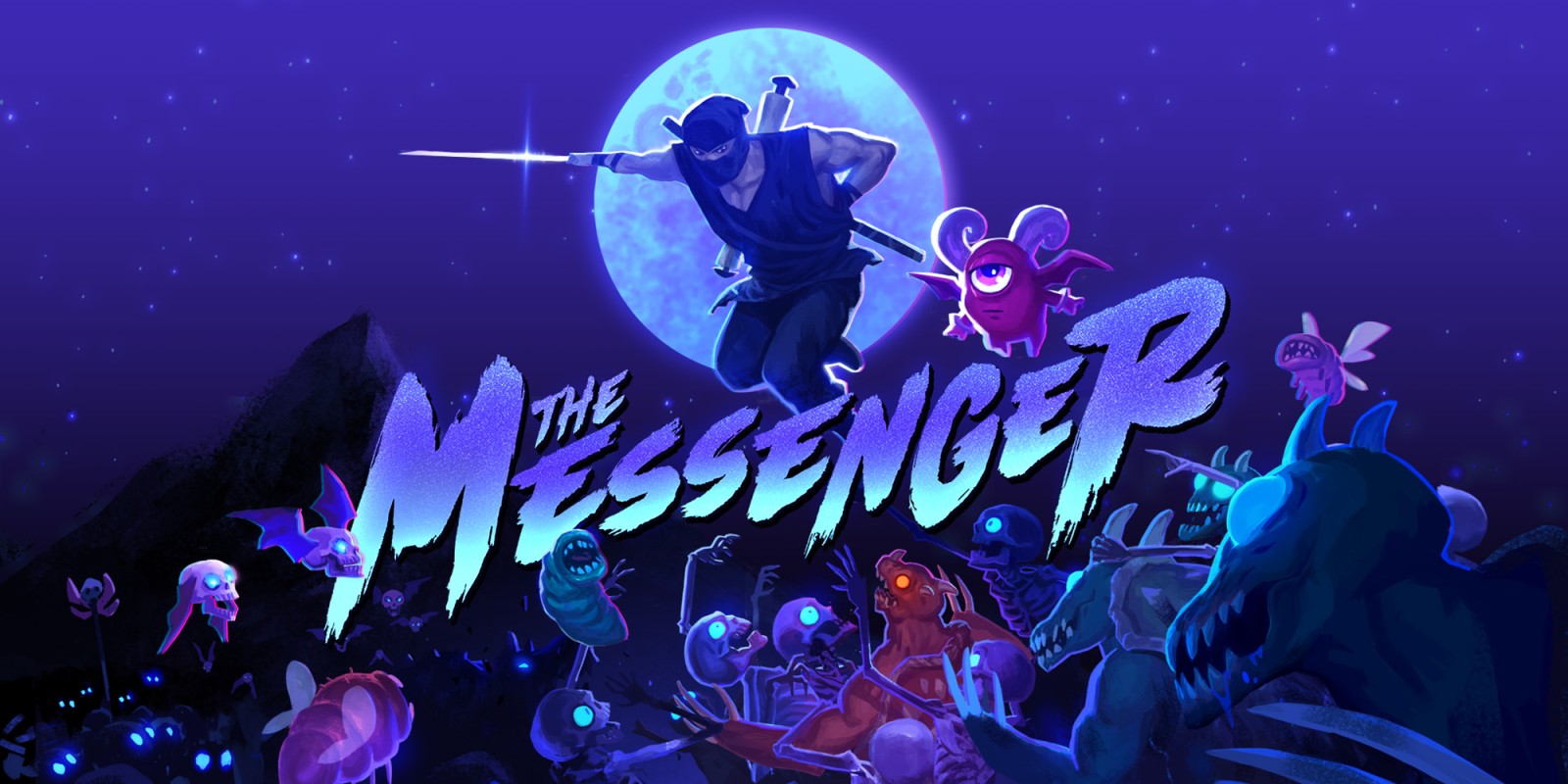
Switch It Up: The Messenger


Title: The Messenger
Release Date: August 30th, 2018
Developer: Sabotage Studio
Publisher: Devolver Digital

*Spoilers to follow*

One thing I like about this style of blog is that it gives me the opportunity to gush about games rather than knit-pick and focus on the faults. The Messenger is equal parts a send-up and homage to the 8-Bit and 16-bit action platformers such as Ninja Gaiden, and more than just a copy-cat of those games, it does enough to innovate to really standout. Some youtubers, game journalists, and those "in the know" even went as far to say that this was their favorite games of 2018, which is saying quite a lot! Let's jump in and find out for ourselves.

Background
Quoting heavily from wikipedia, the game is developed by a Canadian studio known as Sabotage Studio, run by two gaming veterans known as Thierry Boulanger and Martin Brouard. What I find really neat about The Messenger is that it is a game that has been in Mr. Boulanger's mind since he was a kid, and that passion translates into the game very, very well. You can tell that this was a project that is infused with a nostalgic warmth towards the video games from the 80's and 90's; it is one of those rare games where the designers, you can tell, just love video games.


The story of the game is delightful nonsense, and mainly serves as a pretext for the gameplay that unfolds throughout the game. It takes place in a world where demons have decimated most of the population, and the only humans left reside on the tiny corner of an island. The humans here train, as ninja, to fight the demons, and wait for the day a "hero from the west" will arrive to save them from the demons. The game begins with an attack from the demons, and the "hero" arrives to give your character, a ninja, a scroll that must be delivered to an ancient temple. And there you have it! Simple goal, simple protagonist, simple story.

The world of the game is really quite well designed. Each area is visually distinct from the others, and the bosses are really imposing and filled with character. The only place I would knock this game is on the enemy design and variety. The enemies never really stand out and they are used over and over again throughout the game.

 
The music, as well, is a very lovingly crafted. The main conceit of the game is that you skip between an 8-bit and 16-bit world via time traveling, and the score of the game reflects this shift in technology as well. Obviously the people who developed this game were in camp Nintendo growing up, as the score is very much a NES/SNES sound chip composed score; it is very reminiscent of the thumping pulse of Ninja Gaiden, or the rock-opera stylings of Castlevania.

Finally there is the gameplay. The other half the the hook for this game is that not only does this game flit between the 8 and 16 bit worlds, it also changes the style of game it is as well. The game goes from a straight action-platformer, with the standard loop of "make it to the end of the stage and beat the boss," and shifts dramatically to a mostly open-exploration Metroidvania (already getting sick of that term), where your character is hunting down lost relics. The main focus of the game is on platforming, and that action is incredibly tight. Your character moves responsively, has a ton of tricks at his disposal, and can easily flit about the room if you can master the basics. The main gameplay gimmick is that if you can hit an enemy or an object, you are allowed a second "air jump." This means that you spend a good portion of each level jumping around in the air. Boss fights can literally go with you buzzing around your enemy as if you are a pesky hornet.

High Points

  • While this game certainly hearkens back to the age of NES thumb-busters and difficult games, it is a much more forgiving affair. The game has no real penalty for death other than a "try again" from a checkpoint, a taxing of future currency, and some delightful ribbing from a character named Quarble. The game is challenging, but you are given so many chances to just try to repeat and learn that it never feels punitive. The game is littered with checkpoints too, so you are usually only taxed, at most, 3-5 screens of progress when you die. The bosses are mainly patterned based, but there are really fun and intuitive strategies available that you can use to just tear through them if you are skilled enough to try. Finally, in the open portion of the game, the game is willing to offer very direct hints and locations of key items for a very small price. Bottom-line, this game is very accessible, even to those who are neophytes to these "retro" style games. 

  • The game's writing is top-knotch and honestly one of the funniest games, based purely on writing, that I have played. Some examples include the shopkeeper and Quarble. The shopkeeper is where you buy your upgrades, and he will also give hints about the areas and bosses you will face. He has a very wry wit, and they do some very interesting stuff with this character as far as the narrative is concerned. Most of the fourth-wall breaks, as well, come from this character, but they do a good job explaining this characters seeming omniscience. Always, if given the chance, ask the shopkeeper for a story, and keep trying to open up his cabinet. Quarble is a "greed" demon who will continually save you from what would be fatal mishap, but at the cost of about 50 gems that you collect in the future. Each time he comes to "collect" though, he roasts you for your stupidity and poor playing skills. There are a good many responses that generate, and it seemed like a good half the game before they started to repeat.
  •   
Low Points
  • Most reviewers have seemed to favor the second half of the game over the first half, enjoying the Metroidvania elements over the straight platforming. I actually disagree: I feel the game loses a lot of its momentum at this point, and the well paced and written script seems to all but evaporate. It reminds me a lot of the inverted castle from Symphony of the Night: conceptually, it is really neat, as you get to explore the world in a new and exciting way. Execution-wise, though, it is very sparse on content: some very simple and easy boss fights (even the last boss is rather simple), and a bunch of errands across the map with some really annoying backtracking. The 8-bit to 16-bit mechanic doesn't change up the game-play in any truly meaningful way, either, as you are pretty much the same ninja just with a different skin. The first half of the game, though, is hyper-focused, the writing is super strong, and I think a much more enjoyable journey. 
  • The Temple of Time (or whatever its called), is really tough. It is built to be a test of your skills up until that point of the game, and it is arguably the toughest area, even the Hell area. This was the one part of the game I almost rage-quit. 
Verdict
This game is really good! I would highly recommend it, especially with DLC coming down the pipeline this summer. 

Sunday, April 7, 2019

Capcom A to Z: Ace Attorney Investigations: Miles Edgeworth


Title: Ace Attorney Investigations: Miles Edgeworth

Release Date: May 28th 2009 (JP), January 16th 2010 (NA)

Genre: Visual Novel, Point and Click Adventure

Director: Takeshi Yamazaki

As much as I enjoy the Phoenix Wright games, I always dread sinking my time in to one of them. One reason for this is because the games take a great deal of focus and time to complete; the characters and the stories are usually pretty fun, but when they say that these are visual NOVELS they really aren't kidding. They are huge time commitments; sometimes their stories go on for so long that by the end of a particular case you feel worn out. Playing them all in a row can be quite onerous, and some trials really drag.

Now this is a spin-off title: instead of the sweet punching-bag defense attorney that is Phoenix Wright, you instead play as his rival, the no-nonsense gentleman prosecutor that is Miles Edgeworth. This game, as a spin-off, changes the formula up a bit, but not seemingly to a great degree.

Background

This game takes place after the initial Phoenix Wright trilogy. In the world of Phoenix Wright, the justice system in Japan has been overhauled to favor expediency, where the accused criminals have three days to prove their innocence; any more than that then they are officially guilty. This has led to law being a cutthroat and busy affair, where most lawyers patrol crime scenes, collect evidence, and talk to witnesses themselves.

In the main trilogy, Miles Edgeworth grows from antagonist, to friendly rival, to outright just friend of Phoenix Wright. He is supposed to be a calculating and excellent prosecutor, with powerful logic and reasoning skills. He starts the series as the prosecutor who never loses, hell-bent on keeping that reputation due to personal convictions surrounding his own tragic backstory. After the events of the first game, Miles does some soul searching, and pops up to help out every so often. This game takes place after another one of these soul-searching quests, as Miles returns to his office in Japan to find a murder has taken place. This uncovers a conspiracy within the justice department, and Miles is at the center of it.

The game shakes up the traditional formula by taking place completely on the crime scene. There are no trial scenes in this game, and Miles instead conducts interviews with witnesses and suspects right on the scene. Miles will gather evidence, makes logic connections to open up new dialogue options and clues, and can even analyze evidence Resident Evil style to find new clues. Unlike in the main games, which take place in first person POV for the investigation segments, this game takes place on a diorama like set, with Miles being able to actually walk around his world.

Other than the aesthetic changes, the game is pretty much a Phoenix Wright game: you still cross examine witnesses, look for holes in their testimony, present evidence to match contradictions, etc. The bad guys are super obvious and have wacky personalities, it features almost all the cast from the original trilogy, and the drama is cranked up to 11.

The Story
 The story, this time, follows a conspiracy. It is one of those, "all these cases were connected the entire time" kind of deal. It follows a smuggling ring that is trying to steal evidence to expose corruption, blah blah blah, and each case deals with one of the many crimes of the smuggling ring. Overall...the story is okay. I would say better than Phoenix Wright 2 but not as good as the original or the third one.

Sometimes the logic doesn't quite make sense. You can sail through a case, and suddenly there is some logic jump the game expects you to make that just doesn't make obvious sense. A good example is in the first case: you have to prove, logically, that the security guard couldn't have been the murderer due to the fact she would have no reason to rob the office. Makes sense, but the game offered no real evidence that this was a premeditated murder. I banged my head against this over and over and had to look up what to do in a walk-through. Apparently the game expects you to use the wall safe as evidence, as only the person who owned the office would know about the safe, and thus a lowly security guard wouldn't know to look there. To be fair though, this is kind of part and parcel for the Phoenix Wright games, where the clues don't always make it out of translation.

Verdict
 Look to be honest you either love this series or it is not for you. I don't want to talk more for fear of spoiling the game. The game is a game you play for the story and the charm of its writing and characters; the gameplay does not carry this one. It wears its faults on its sleeves though, and makes no apologies for them.

So bottom line, if you are a fan of the series, then you already know what to expect and should give this game a try. If you aren't a fan of the series, then avoid this game, it won't change your opinion. If you want to get into this series, I recommend starting with the initial trilogy; it shouldn't be missed! If you don't like anime styled games either, I'd probably avoid this one too.


#127: Pachinko Wars

  Title: Pachinko Wars Release Date: 7/17/1992 Developer: OeRSTED Publisher: Coconuts Japan It is finally time for the ever popular gambling...